

PEBBLEVINAEdge-AI semiconductors and compute-in-memory technology
Pebble Vina is a Hanoi-based company designing edge-AI chips on Compute-in-Memory technology.
Pebble Vina researches, designs chips, develops AI software and delivers training for enterprises in Vietnam.
- 01LEGAL ENTITY
- CÔNG TY TNHH PEBBLE VINA
- 02TAX CODE
- 0111545175
- 03HEADQUARTERS
- Hanoi, Vietnam
- 04TECHNOLOGY PARTNER
- Pebble Square Inc. ↗

What the company works on
Pebble Vina researches and develops AI semiconductor technologies — from chip architecture and compute-in-memory (CIM) to software and applied AI solutions.
Hardware and software developed together: computing platforms for AI, Edge AI, on-device AI and the next generation of AI models.
Two CIM directions
CIM (Compute-in-Memory) brings computation close to where data is stored, cutting the volume of data that has to move between memory and processor. Pebble Vina develops two CIM directions — Analog and Digital — to serve different AI computing needs.
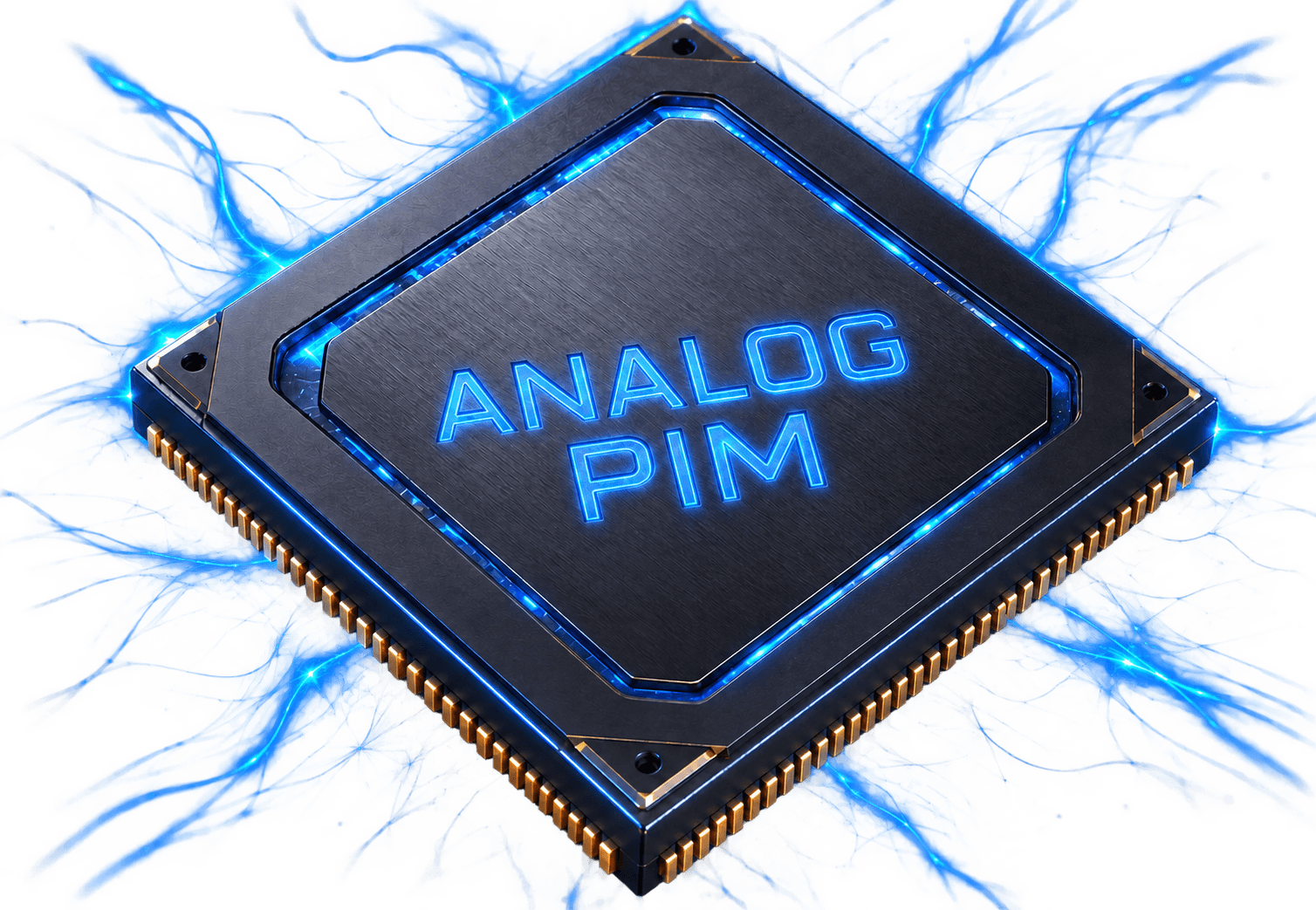
An eFlash synapse network computes right inside the memory array at ultra-low power, suited to devices with very limited energy. It serves small AI models, sensors, Edge AI, AI IoT and always-on applications.
EXPLORE THE ANALOG CHIP →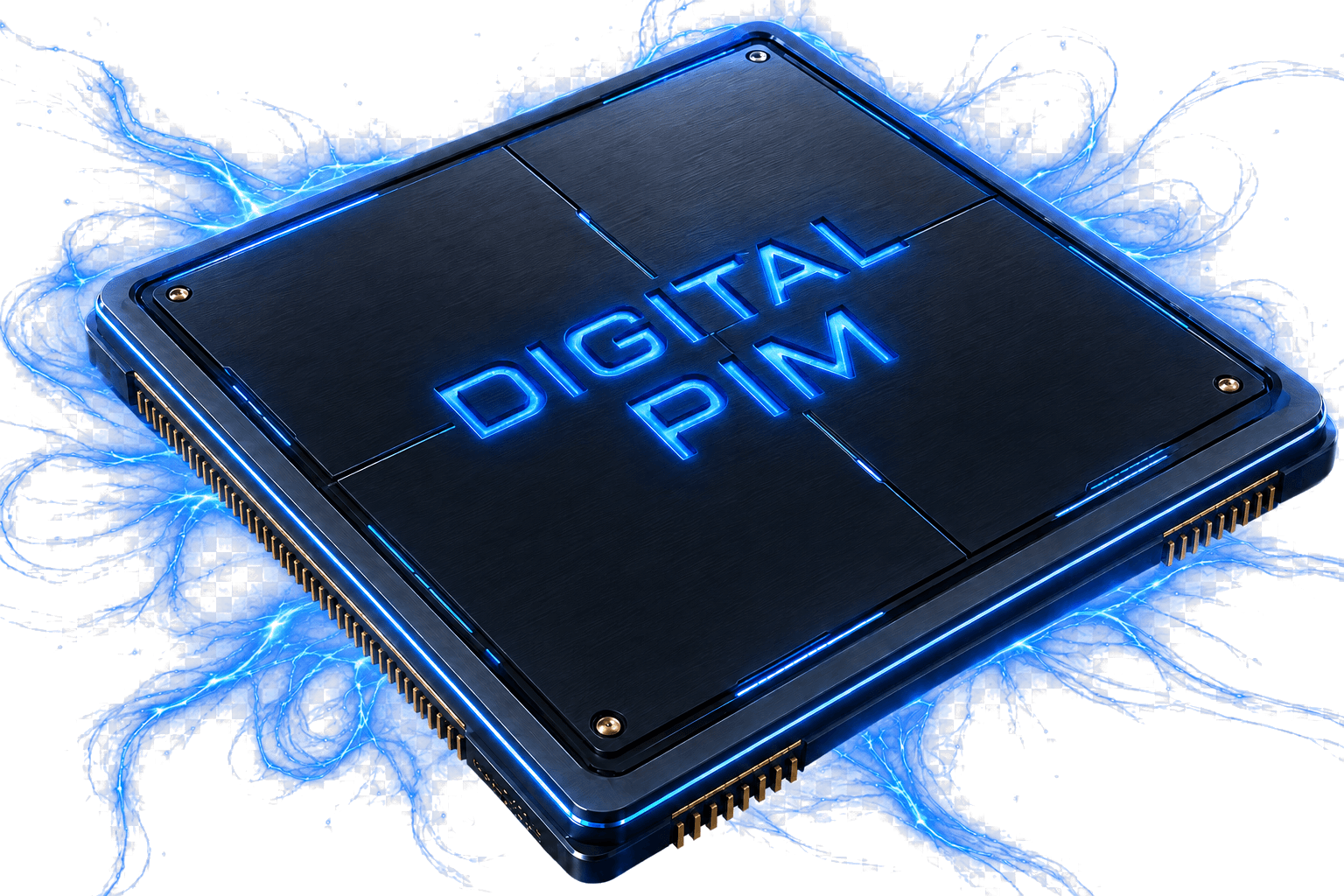
High-speed SRAM paired with digital logic alongside it delivers high compute performance and large scalability, plus accuracy for complex models. It serves large language models (LLMs), generative AI, heavy image processing and tasks that need high memory bandwidth.
Figures and their status
Every figure below carries the product it comes from and that product's date.
Product timeline
- Already done
- On the roadmap
- 05/2023In production — MINTAlready done
- 2024PoC — PAPAYAAlready done
- Q3/2026Roadmap — ESPRESSOOn the roadmap
- 12/2026Roadmap — enterprise softwareOn the roadmap
- 2027Needs survey — AI trainingOn the roadmap
Collaboration
Pebble Vina actively expands **strategic collaboration with leading partners, customers and institutions** to drive technological innovation and create lasting value.
- 02.04.2025MOU signed with a leading Korean technology partner
Joint research and development of **CIM AI solutions**, targeting higher performance and broader applications.
- 15.05.2025Meeting with our strategic partner in Japan
Discussing on-device AI trends and **opportunities to develop the next-generation semiconductor market** together.
- 20.03.2025Deploying AI solutions with Vietnamese enterprises
Building **custom AI systems** that fit each industry's specifics and real operating needs.
- 10.02.2025Strategic partnership with an international partner
Accelerating AI innovation together and bringing **advanced solutions to the global market**.
Frequently asked questions about CIM and Pebble Vina's products
These are the questions enterprise buyers most often ask before reaching out, answered strictly from what this site already publishes.
- What is CIM (Compute-in-Memory), and why does it matter for AI?
- CIM (Compute-in-Memory) is a computing approach that brings processing close to where data is stored, cutting the volume of data that has to move between memory and processor. As AI models grow, the constant shuttling of data between DRAM and the NPU can hold back computational efficiency — CIM addresses exactly that bottleneck for suitable AI workloads. Pebble Vina develops two CIM directions, Analog and Digital, to serve different AI computing needs.
- What is the difference between Analog CIM and Digital CIM?
- Analog CIM integrates compute capability directly into memory to limit data movement between memory and processor, and it is currently implemented in MINT (in production since 05/2023) and PAPAYA / PAPAYA FLEX (2024 PoC). Digital CIM is built to meet higher computational demands and flexible integration, forming the foundation for ESPRESSO (roadmap Q3/2026). The two directions serve different AI computing needs, from compact edge devices to workloads beyond Edge AI.
- Which Pebble Vina products are available now, and which are on the roadmap?
- MINT is an Analog CIM chip in mass production since 05/2023, while PAPAYA / PAPAYA FLEX are Analog CIM chips for computer vision: PAPAYA is silicon-verified and PAPAYA FLEX is being productized with a target of 2027 H1. ESPRESSO is a Digital CIM chip on the roadmap, expected Q3/2026. Enterprise software (expected 12/2026) and enterprise AI training (needs survey, 2027) remain on the roadmap.
- What is MINT used for?
- MINT is an Analog CIM chip proven in mass production since 05/2023, built for devices that need continuous monitoring at ultra-low power — 30 GOPS at 17.6 TOPS/W efficiency. With more than 600,000 chips produced at a 92% pass rate, MINT serves electrical-safety applications such as AFCI, safety-monitoring devices and sensors that need AI running right at the edge.
- What are Pebble Vina's enterprise software platform and AI training offering, and when will they arrive?
- The enterprise software platform connects data and processes across CRM, ERP, HRM and DMS to bring AI into operations and decision-making; it is expected to be complete by 12/2026 and currently stands at 82% of its target. Enterprise AI training is a programme designed around each organisation's problems and real needs, currently at the 2027 needs-survey stage. Both remain on the roadmap and are not yet deployed.
- How can I get in touch or request a consultation or sample?
- Send a request through the form on the homepage or the Products & solutions page — just describe the workload, and our engineering team will reply with a suitable chip or card configuration. You can also reach us directly by email at contact@pebblevina.com, by phone at 0345 913 369, or at our office in Landmark 72 Tower, Hanoi. Information you send is kept confidential and used only to support your request.
Legal information
- LEGAL ENTITY
- CÔNG TY TNHH PEBBLE VINA
- TAX CODE
- 0111545175
- ADDRESS
- Office O1912, 19th floor, Landmark 72 Tower, Zone E6, Cau Giay New Urban Area, Yen Hoa Ward, Hanoi
- PHONE
- 0345 913 369
- TECHNOLOGY PARTNER
- Pebble Square Inc. ↗
We are always ready to listen and **work alongside you to turn ideas into practical value** and shape the future of technology.